
Quick answer
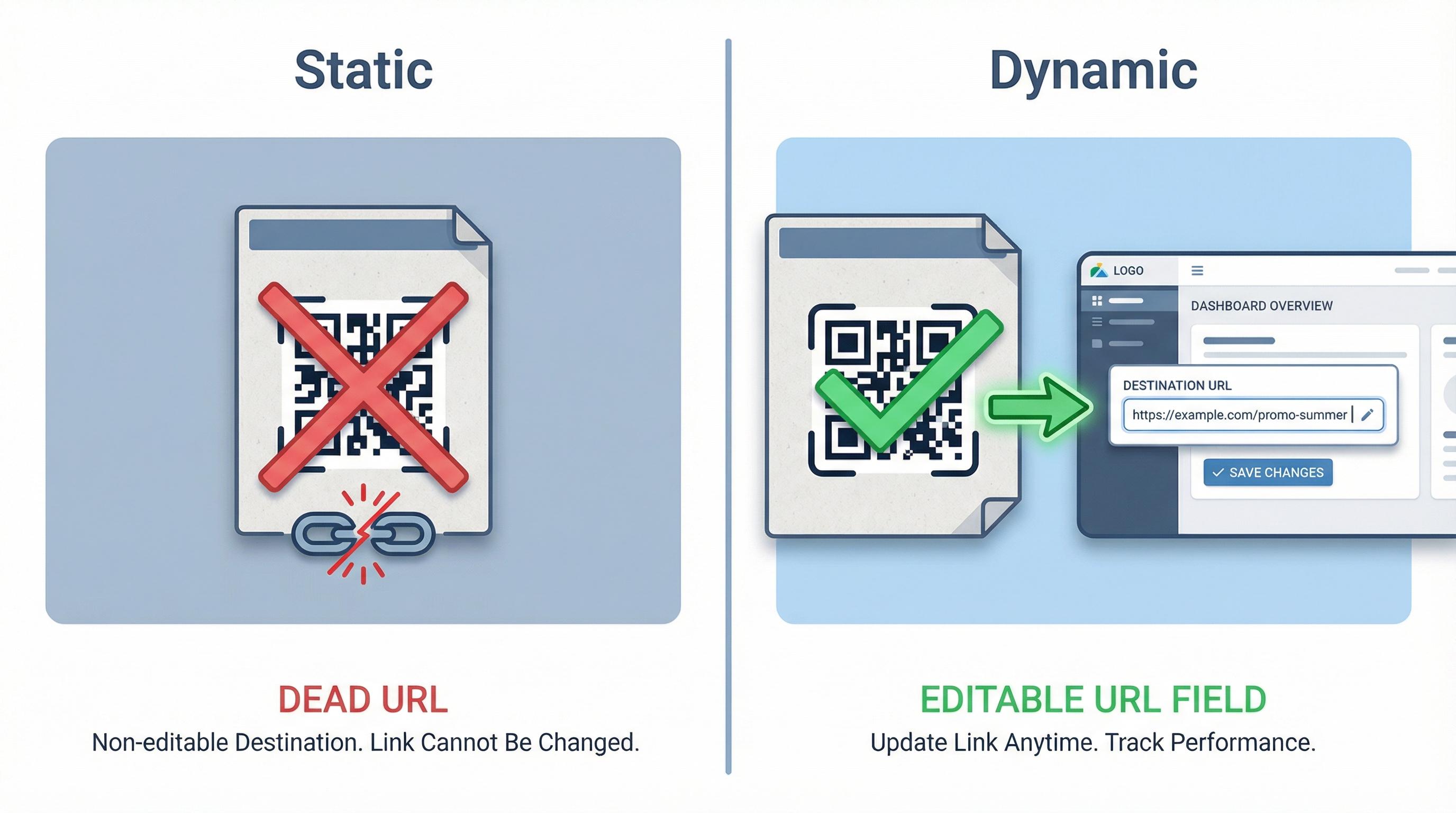
A static QR code is permanent — once printed, the data is fixed forever. A dynamic QR code routes through a redirect you control, so you can update the destination at any time without reprinting. Dynamic codes are essential for any campaign where URLs change.
What is a Static QR Code?
A static QR code encodes your data — a URL, contact, WiFi password, or plain text — directly into the QR pattern. Once generated and printed, that data is permanent. You cannot change it.
Static codes work fine for:
- Personal WiFi passwords that never change
- One-time event check-in links
- Plain text like a short message or fixed phone number
- Anything where you are 100% certain the content will not change
The problem starts when you use static QR codes for business campaigns where URLs change — menus get updated, promo pages expire, link structures migrate. Every change forces a full reprint.
What is a Dynamic QR Code?
A dynamic QR code encodes a short redirect URL (e.g., qrmaster.net/r/abc123) instead of your final destination. You control where that redirect points in a dashboard. Change the destination, and the printed code automatically sends scanners to the new URL — no reprint needed.
Dynamic codes also enable:
- Scan tracking — see how many people scanned, on which device, from which country
- A/B destination testing — route scans to different landing pages to compare performance
- Campaign attribution — tie print placements to real conversion data
Static vs Dynamic QR Code: Feature Comparison
| Feature | Static QR Code | Dynamic QR Code |
|---|---|---|
| Edit destination after print | No | Yes |
| Scan analytics | No | Yes |
| Reprint needed when URL changes | Yes | No |
| Cost after printing | €0 (but reprints add up) | Subscription fee |
| Works offline (WiFi, vCard) | Yes | URL-based only |
| Best for | One-time / permanent use | Campaigns, print, marketing |
The Real Cost of Static QR Code Reprints
Here is where the math matters. Many businesses default to static QR codes because they are free to generate. But when the linked URL changes — which happens more often than expected — the cost of reprinting is significant.
Example 1: Restaurant Menu
A restaurant prints 200 table tent cards with a static QR code linking to their PDF menu. The menu changes quarterly (seasonal updates). Each reprint batch costs €60 in printing.
- Year 1 cost with static: €60 × 4 reprints = €240 in printing alone
- Year 1 cost with dynamic: €0 in reprints + €9/month subscription = €108
- Savings with dynamic in Year 1: €132
Example 2: Retail Shelf Talkers
A retailer places 500 shelf talkers with a static QR linking to a seasonal promotion page. The promotion runs 6 times per year.
- Static reprint cost: 500 talkers × €0.18 × 6 = €540/year
- Dynamic QR subscription: ~€108/year
- Savings: €432/year
Use the QR Code Reprint Cost Calculator to enter your own numbers and see your exact savings.
When to Use Static QR Codes
Static is the right choice when:
- The destination will never change (e.g., a permanent product manual URL)
- You are encoding non-URL data: WiFi credentials, plain text, phone numbers, vCards
- It is a one-time use case (event check-in, single-use coupon)
- You have no budget for a subscription and the URL is guaranteed stable
When to Use Dynamic QR Codes
Dynamic is the right choice when:
- The destination URL might change (promotions, menus, seasonal campaigns)
- You need to know how many people scanned and from where
- You are printing at scale (reprinting 500+ items every time a link changes is expensive)
- You want to test different destinations (A/B routing)
- You need to fix a typo in the URL after printing
Get started with a dynamic QR code generator to create codes you can update after printing. Pair it with QR code tracking to see exactly who scans and from where.
Summary
The choice between static and dynamic QR codes comes down to one question: will the destination ever change? If yes, use dynamic — the subscription cost is almost always lower than the cost of reprinting. If no, static is free and perfectly adequate.